I wanted a record I could use at an appointment without first searching through notes, calendars, and lab reports.
My medication reminders were in one place. Notes about how I felt were somewhere else. Blood results arrived from different clinics in different formats. A spreadsheet helped, but keeping everything together took more effort than I wanted.
So I built TRT Monitor.
What I wanted to keep together
The first requirement was a dose history: what I had taken, when I had taken it, and where I had injected. Alongside that, I wanted symptom notes and a blood test history I could return to later.
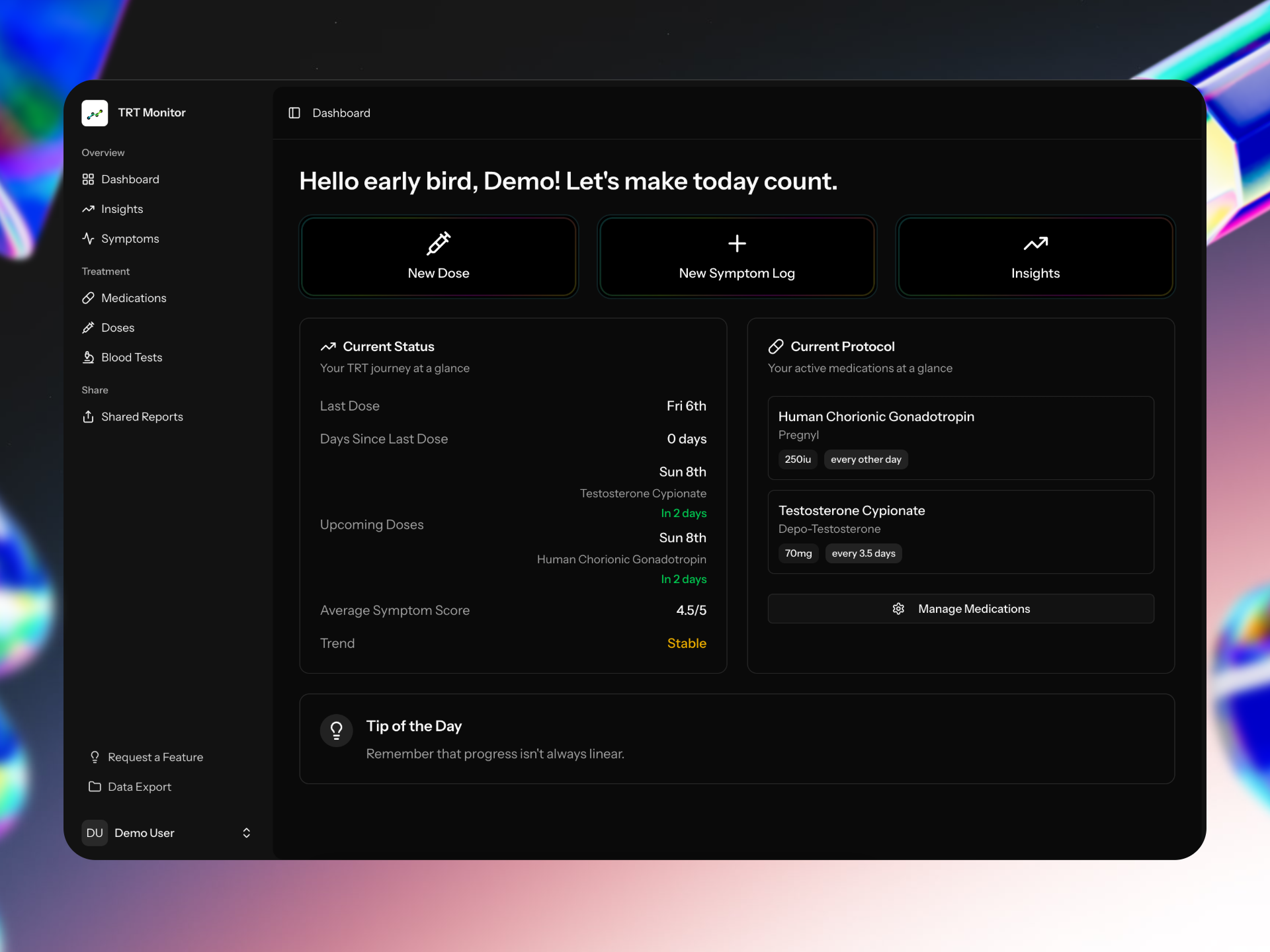
Seeing those records together is useful when I am trying to recall a particular week or prepare questions for a clinician. It does not tell me why a symptom happened or what treatment to choose.
Blood results I can find again
Results from different labs can use different units and reference ranges. I wanted to retain those details alongside the date of each test, rather than copy a number into a note and lose its context.
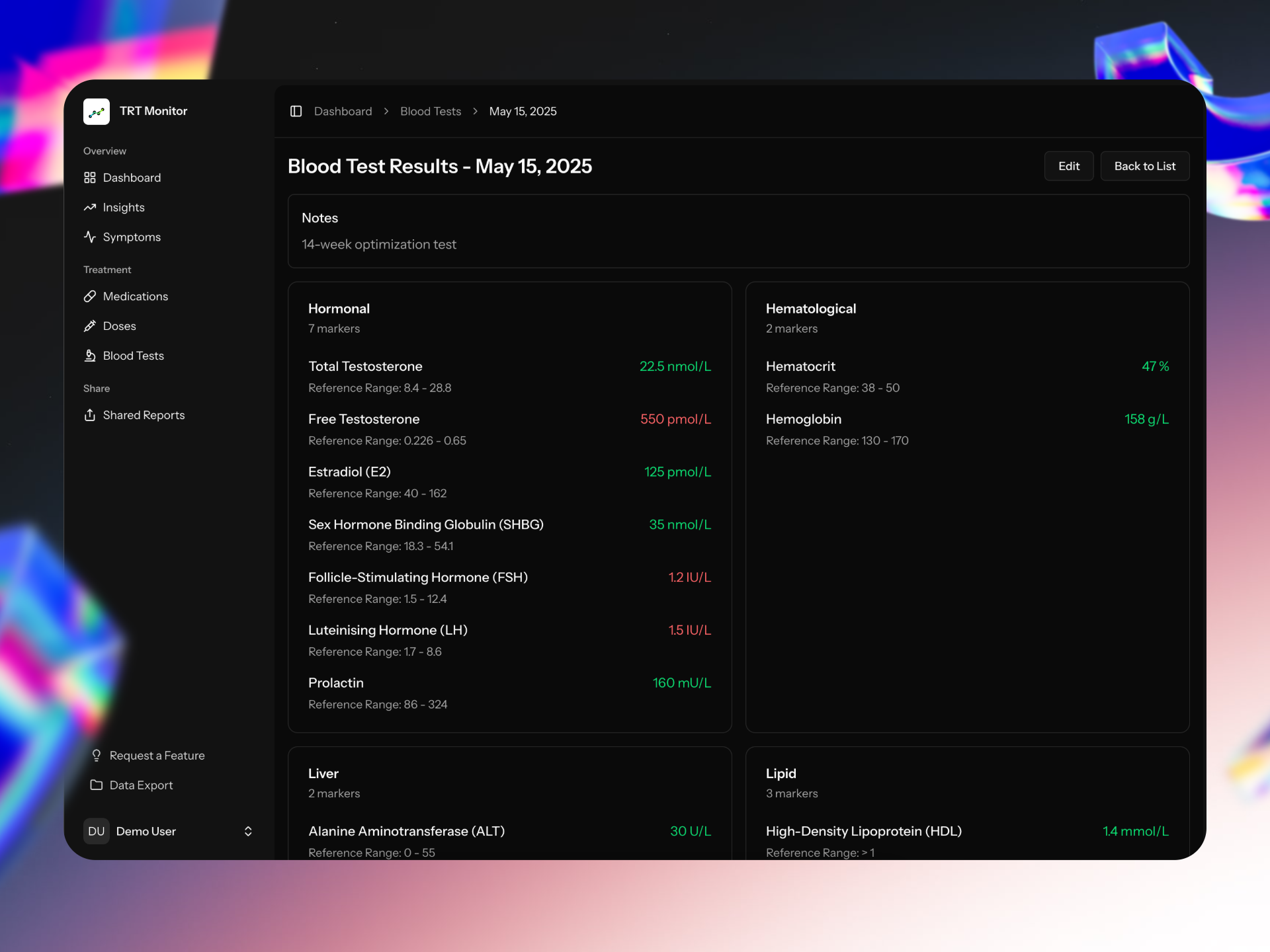
The app now supports manual blood result entry and optional document imports. Manual entry remains available if you prefer it. The privacy policy explains how uploaded documents are processed.
Built around everyday use
TRT Monitor includes dose logging, symptom tracking, blood result history, and reports you can share. The features page describes what is available now.
I am a developer and a TRT patient. Feedback from people using the app helps me decide what to improve. If something takes too many steps or a record is hard to find, tell me.
Matt, founder of TRT Monitor